
The Key Challenges Russian Intelligence Faces And How They Could Be Overcome
An article about Russian intelligence shortcomings:

What are the key intelligence challenges to the Russian intelligence community and how can these be overcome?
The Russian intelligence community’s greatest challenge is the authoritarian system which it operates under, a structure that fundamentally undermines its effectiveness. Putin deliberately fosters a divided and fragmented intelligence apparatus plagued by issues of Inter-agency rivalry, endemic corruption, and the inability to challenge leadership assumptions to maintain power. Overcoming these failures requires centralized coordination with budgetary authority, robust anti-corruption measures and institutionalized dissent. While technically feasible and modelled on successful reforms in other authoritarian states, these changes require political will to prioritize institutional effectiveness over personal control a transformation that fundamentally threatens the patronage networks sustaining Putin’s power.
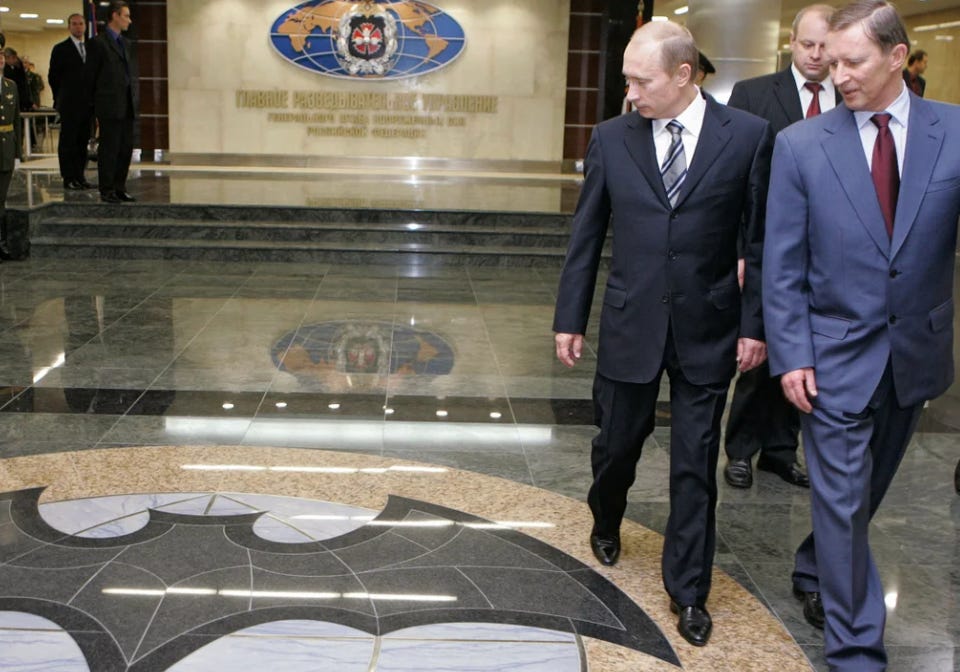
Russia’s authoritarian system emerged from the post-Soviet collapse, enabling former KGB operatives to consolidate power and dismantle democratic institutions, transforming intelligence agencies into instruments of regime preservation rather than national security. Putin’s regime represents what political scientist Karen Dawisha terms a “kleptocracy[1]“ where intelligence agencies serve elite enrichment and political control, exemplified by the 2003 Yukos affair well. Russia’s intelligence apparatus the FSB, GRU, and SVR have prioritised regime security and have demonstrated tactical competence in operations like the 2014 Crimea annexation. However, Russian intel is plagued my flaws seen with disturbing patterns emerging across Afghanistan, Georgia 2008, Maidan 2014, and catastrophically Ukraine most recently. Russia’s intelligence system in the current day represents an overburden unfocused force, which has struggled to deal with reoccurring failure, on a strategic and political level.
Inter-Agency Competition and Rivalry
Russia’s authoritarian structure breeds institutional rivalry that fundamentally undermines intelligence effectiveness, with agencies competing for Putin’s favour in a struggle motivated by economic benefits, access to power, and institutional survival. This creates several problems:
Pursuit of Easy Intelligence
Inter-agency competition incentivizes pursuing easily accessible tactical intelligence over complex strategic analysis, systematically missing critical information. Amy B. Zegart identifies that when agencies compete for leadership favour rather than accuracy, they rationally prioritize outputs demonstrating productivity over uncomfortable truths[2]. Putin consistently rewarded the FSB’s rapid assessments while punishing the GRU following the 2018 Skripal exposure, with the FSB gaining unprecedented influence from 2014-2022 by delivering quick reports confirming Putin’s worldview[3]. The FSB’s pre-invasion Ukrainian assessment exemplifies this: the agency-based analysis on open-source polling showing dissatisfaction with Zelensky while ignoring harder-to-access data demonstrating Ukrainian hostility toward Russian military presence[4]. This pattern emerges from perverse institutional incentives where agencies demonstrating volume and speed gain favour over those conducting painstaking strategic analysis. Critically, this creates a self-reinforcing cycle where agencies prioritizing superficial intelligence lose analytical expertise, instead promoting officers skilled at fabricating quick reports while becoming vulnerable to adversary deception operations exploiting reliance on easily manipulated open-source data. This dysfunction, however, is not inherent to authoritarianism: China’s 2018 Ministry of State Security centralization eliminated precisely these coordination failures[5], demonstrating that authoritarian systems can prioritize institutional effectiveness when leadership possesses sufficient state capacity to impose reform without threatening personal rule.
Duplication and Fragmentation Russia’s intelligence coordination failures stem from institutional competition overwhelming functional necessity, as Michael Herman argues a dynamic deliberately fostered by Putin’s authoritarian system[6]. This creates structural incentives where agencies compete rather than cooperate, producing catastrophic operational failures: the 2016 DNC hacking saw the GRU, FSB, and SVR conduct simultaneous uncoordinated intrusions, creating overlapping digital footprints that enabled Western firms to attribute operations and develop countermeasures a failure avoidable through basic coordination[7]. Similarly, before the 2014 Maidan Revolution, the SVR and FSB operated competing source networks within Ukraine’s government, each producing conflicting assessments that proved catastrophically wrong regarding regime fragility. This fragmentation creates compounding vulnerabilities: agencies waste finite resources competing for identical sources through coercion and threats rather than expanding overall collection capabilities, becoming dependent on narrow intelligence streams vulnerable to sudden informational collapse. Western intelligence exploits this siloing by feeding false information to individual services that cannot verify reporting against other agencies’ networks, while recruiting double agents who remain undetected because agencies cannot cross-check for inconsistencies. Duplicated operations destroy plausible deniability and multiply counter-espionage penetration points, while preventing organizational learning as failures go unexamined by competitors and successes remain proprietary. Russia possesses finite elite cyber specialists, cryptographers, and field operatives, yet these scarce resources are divided across redundant competing projects rather than concentrated on high-value targets. This contrasts sharply with the Five Eyes alliance, where agencies share sources enabling cross-verification that produced accurate pre-invasion Ukraine assessments precisely what Russian fragmentation made impossible[8]. Critically, this dysfunction is not accidental but structurally necessary: centralized coordination would create unified intelligence capability potentially threatening Putin’s personalist rule, revealing how authoritarian control imperatives directly undermine intelligence effectiveness.
Overcoming Inter-Agency Rivalry
Russia must implement fundamental structural reforms through three mechanisms. First, establish an Intelligence Coordination Committee with genuine budgetary authority positioned above individual agencies to allocate resources based on performance rather than political favour. China has shown through its HSS this can work under an authoritarian framework and stop rivalry[9].
Second, define clear jurisdictional boundaries assigning FSB domestic counterintelligence, SVR foreign human intelligence, and GRU military operations, removing overlapping mandates forcing competition. This is seen to have worked in South Africa post-apartheid intelligence restricting, which consolidated seven competing agencies into three services which Cleary defined jurisdictions[10].
Third, enforce cooperation through joint task forces with rotational programs, creating cross-agency professional relationships and shared success metrics, this will help eliminate dual efforts and was seen to have worked with the South African and Chinese models.
Corruption and Economic Self-Interest
The Russian authoritarian system has fostered endemic corruption within intelligence agencies, fundamentally redirecting focus from national security to personal enrichment, which creates several sub problems:
Quality of Intelligence
Russian security services suffer from systemic corruption that transforms intelligence officers from guardians of national security into rent-seeking predators, Mark Galeotti alleges creating institutions structurally incapable of creating quality intelligence[11]. Officers prioritize profit maximization over operational effectiveness through fabrication of reports and reliance on easy access information, which effects the quality of reports and the methods of collecting information. The FSB’s 2022 Ukraine operations exemplify this: officers embezzled millions allocated for developing sources, creating “phantom networks” while packaging social media information as sophisticated operations[12]. Leadership consequently made decisions based on fabricated reporting, producing catastrophic mis assessments. Beyond falsified reporting, corruption compromises the entire collection infrastructure: funds designated for safe houses, surveillance equipment, technical operations, and source payments are systematically stolen, leaving genuine operations chronically underfunded, creating poor intelligence. Corrupt officers benefit from exaggerating threats to justify increased budgets for embezzlement, further distorting strategic assessments and resource allocation. In contrast, Britain’s MI6 links career advancement to analytical accuracy, which can confound with competitive salaries, which has led to much greater success in foreign campaigns such as in the middle east than Russia[13].
Operational Security
The Russian authoritarian system has enabled corruption, which has compromised operational security through recruitment vulnerabilities and information leakage. Russian intelligence officials have become extensively entangled with organised crime networks and often overshare information with criminal associates creating dangerous breaches in operational security. Officers’ loyalty to money above ideology makes them vulnerable to foreign recruitment as well[14], often for superior compensation. The 2018 exposure of multiple FSB officers recruited by Western services illustrates this: officers maintaining expensive lifestyles became vulnerable to recruitment, whilst criminal agents who have access to sensitive information, are easy to intercept due to lack of training[15].
Resource Misallocation and External Consequences:
Corruption creates dual pathologies that systematically redirect intelligence resources and generate reckless operations. Domestically, over 60,000 annual corporate raiding cases[16] throughout the 2000s consumed thousands of officer-hours targeting private businesses rather than security threats. This has contributed to catastrophic failures like the 2017 St. Petersburg Metro bombing where the FSB failed despite clear signs to stop the attacker[17]. Internationally, corruption drives dangerous risk-taking: the September 2014 Kohver kidnapping saw FSB operatives’ storm across Estonia’s border to abduct an intelligence officer investigating FSB-linked narcotics smuggling[18]. This has catastrophic effects diplomatically and strategically for Russia, isolating it economically and its bordering states of the Baltics being reinforced and militarised by NATO. Officers are seen to prioritise economic gain over maintaining national security and interests. Resources are misused and therefore capacity to deal with threats is reduced.
Critically, Putin actively encourages corruption for strategic purposes: it benefits him directly, redirects powerful agencies away from challenging his power, and ensures officer loyalty by linking prosperity to regime continuation. Authoritarianism creates vulnerability.
Overcoming Corruption
Russia must implement comprehensive anti-corruption measures through reforms. First, reverse legislation enabling FSB business activities and prohibit officers from holding private interests, combining strict prohibitions with competitive compensation. Singapore’s Prevention of Corruption Act demonstrates this effectiveness: imposing fines up to $100,000- or seven-years imprisonment[19]. South Korea reinforces this through mandatory monitoring of officers’ bank accounts and family members’ financial activities.
Second, establish protected whistleblower channels with substantial financial incentives. The US SEC whistleblower program[20], which awarded over $1.3 billion between 2012 and 2023, demonstrates how financial rewards create powerful incentives to report corruption. So, a culture of accountability can be created, and agents can be encouraged to come forward to challenge corruption.
It is important to note that authoritarian regimes need not operate corrupt systems to maintain control: East Germany’s Stasi, Iran’s intelligence services, and Communist Cuba maintained low corruption through strict discipline and ideological vetting[21]. However, Putin actively encourages corruption to ensure officer loyalty, meaning genuine reform requires prioritizing institutional integrity over personal control.
Inability to Challenge Leadership
Russian intelligence’s fundamental flaw is its inability to challenge leadership assumptions due to the authoritarian nature of the state. The system lacks the accountability needed to sculpt the state’s approach based on facts rather than assumptions. The February 2022 Security Council meeting demonstrated where Putin embarrassed SVR director for his stance on the Donbas showed this well.
Inflexibility and Compromised Warning Function
Intelligence’s core function is speaking truth to power and challenging policy assumptions with objective analysis, as Sherman Kent established[22]. Russian intelligence’s inability to challenge Putin’s assumptions creates fundamental inflexibility: agencies cannot adapt methodologies or collection priorities to contradict leadership worldview, producing a constricted apparatus incapable of performing strategic warning functions. Agencies excel at tactical intelligence as it does not challenge Putin’s world views. Putin’s conviction that liberal decline has weakened Western states forces intelligence agencies into aggressive kinetic operations designed to assert dominance, with methodologies assuming minimal resistance. The GRU’s 2018 OPCW operation exemplified this: operatives arrived in the Netherlands under their own names on a direct Moscow flight, tradecraft so sloppy that MI6 Chief Richard Moore described Russian intelligence as “feral” not from incompetence, but from operating under assumptions that extensive planning is unnecessary against “weak” Western counterintelligence[23]. This inflexibility corrupts the entire intelligence cycle: when agencies cannot challenge foundational assumptions, they must conduct collection and analysis within predetermined conclusions, selecting collection targets to confirm rather than test hypotheses, engineering analytical methodologies to reach leadership’s desired conclusions. Before Ukraine 2022, the FSB possessed polls showing 84 percent of Ukrainians[24] would regard Russian forces as “occupation,” yet this data was suppressed to accommodate Putin’s assumptions about Slavic brotherhood. The 2008 Georgia war demonstrated identical dysfunction[25]: intelligence warnings that Western response would be severe or that Russian military performance would expose capability gaps were suppressed because they contradicted Putin’s assumptions, producing strategic surprise when NATO suspended cooperation. Most critically, this eliminates feedback mechanisms enabling leaders to recognize and correct errors before they metastasize small miscalculations compound into catastrophic failures like Ukraine 2022 because no institution possesses authority to force reality upon leadership until battlefield outcomes make denial impossible.
Adversary Exploitation and Institutional Decay
Intelligence systems unable to challenge leadership become predictable targets for adversary manipulation, as Robert Jervis demonstrates in his analysis of intelligence failures and cognitive biases[26]. Western intelligence services understand Russian agencies cannot contradict Putin’s core beliefs, making Russian strategic behaviour highly predictable. If Western services know Putin believes Ukraine is weak, they can feed information through Russian collection channels confirming these beliefs, confident it will bypass critical analysis. This creates adverse selection degrading institutional quality: capable analysts are purged for providing unwelcome assessments while officers fabricating politically convenient conclusions are promoted. Following the 2022 Ukraine debacle, investigations revealed FSB Fifth Service leadership consisted entirely of officers who had advanced by consistently confirming Putin’s beliefs[27]. Over time, this produces intelligence services structurally incapable of accurate strategic analysis because necessary expertise and analytical culture have been systematically eliminated.
Again, it is evident that the Russian authoritarian system and attitudes towards dissent, requires intelligence to protect regime position and reinforce beliefs rather than challenges them, which creates the problems mentioned above.
Overcoming the Inability to Challenge Leadership
Russia must institutionalize dissent through three fundamental reforms. First, establish independent analytical units explicitly tasked with challenging prevailing assumptions, with anonymous submission channels and legal guarantees protecting analysts who provide unwelcome intelligence. The CIA’s Red Cell, created after 9/11 and Iraq WMD failures with instructions to “tell me things others don’t and make senior officials feel uncomfortable,” demonstrates that institutionalized contrarianism can coexist with career advancement when leadership values alternative perspectives[28].
Second, separate analytical chains from operational commands, preventing operations chiefs from pressuring analysts to justify predetermined actions. The Iraq WMD debacle revealed how operational imperatives corrupted analytical objectivity, hence the passing of the Intelligence community directive 203[29], which provided legal protections to unwanted analysis.
Third, implement mandatory strategic review before major coercive operations, requiring independent assessment of long-term political consequences and establishing success metrics based on strategic outcomes rather than tactical results, as Israel institutionalized after the 1973 Yom Kippur intelligence failure[30].
However, these reforms share a fatal prerequisite: leadership must genuinely want accurate intelligence over comfortable illusions, and unless Putin prioritizes strategic effectiveness over personal validation, these technically sound reforms remain politically impossible.
To the contrary this assessment risks overstating Russian intelligence dysfunction by overemphasising strategic failures. Russian intelligence services demonstrate tactical operational capabilities that consistently exceed Western counterparts in specific domains: the GRU’s cyber operations penetrated the DNC despite FBI warnings[31], the Skripal poisoning reached a defector on British soil under MI6 protection[32], and intelligence-enabled “little green men” seized Crimea. Russia’s operations on European soil indicated tactical competence which has been hard to replicate comparatively. This distinction matters: if tactical operations succeed but strategic outcomes fail, the problem may lie with political leadership rather than intelligence agencies themselves. Moreover, the “authoritarian intelligence failure” thesis struggles against China’s Ministry of State Security[33], which operates under comparable authoritarian constraints yet demonstrates sophisticated long-term strategic planning, successful Western institution penetration, and systematic economic espionage. It is more likely that the way Putin has chosen to use intelligence services and control them in the Russian authoritarian system has not been indicative of creating an effective intelligence apparatus and could be done better.
Conclusion
Russian intelligence challenges stem from the authoritarian system’s nature flaws deliberately maintained as means of control. Inter-agency rivalries, rampant corruption, and inability to challenge leadership assumptions create a system burdened by fragmentation and incapable of core functions. Effective intelligence requires institutional independence, analytical integrity, and accountability mechanisms precisely what authoritarianism precludes, as Mark Lowenthal and Jeffrey Richelson argue. If Russia breaks through its authoritarian system, there is a clear roadmap requiring restructuring of intelligence infrastructure, responsibilities, and culture away from personal enrichment toward accountability and national security interests. Without fixing these systemic issues, Russia will continue encountering significant problems and consistently failing in external campaigns, as the authoritarian foundations ensuring Putin’s power fundamentally contradict the institutional reforms necessary for intelligence effectiveness.
BIBLIOGRAPHY
Abrahamian, Ervand. A History of Modern Iran. Cambridge: Cambridge University Press, 2008.
Aldrich, Richard J., and Rory Cormac. The Black Door: Spies, Secret Intelligence and British Prime Ministers. London: William Collins, 2016.
Baev, Pavel K. “Russian Military Performance in Georgia: Lessons and Implications.” Caucasian Review of International Affairs 2, no. 4 (2008): 180-191.
Bar-Joseph, Uri. The Watchman Fell Asleep: The Surprise of Yom Kippur and Its Sources. Albany: State University of New York Press, 2005.
BBC News. “GRU: Who Is Russia’s Military Intelligence Agency?” October 8, 2018.
. “Salisbury Poisonings: What Happened to Sergei and Yulia Skripal?” September 13, 2018.
Botha, Anneli, and Kent Roach. “Terrorism and Counterintelligence in Post-Apartheid South Africa.” In The Oxford Handbook of National Security Intelligence, edited by Loch K. Johnson, 774-790. Oxford: Oxford University Press, 2010.
Central Intelligence Agency. “Red Cell: Telling Hard Truths to Decision Makers.” Studies in Intelligence 53, no. 3 (2009): 1-7.
Corera, Gordon. Russians Among Us: Sleeper Cells, Ghost Stories and the Hunt for Putin’s Agents. London: William Collins, 2020.
Dawisha, Karen. Putin’s Kleptocracy: Who Owns Russia? New York: Simon & Schuster, 2014.
Galeotti, Mark. “The Criminalization of Russian State Security.” Global Crime 17, no. 3-4 (2016): 257-275.
Q2AAaa. “Estonian Kidnap Is Russia’s Latest Provocation.” The Moscow Times, September 11, 2014.
Gieseke, Jens. The History of the Stasi: East Germany’s Secret Police, 1945-1990. New York: Berghahn Books, 2014.
Goncharenko, Roman. “Ukraine Invasion: Did Russian Intelligence Fail Putin?” Deutsche Welle, May 11, 2022.
Goodman, Michael S. The Official History of the Joint Intelligence Committee: Volume I: From the Approach of the Second World War to the Suez Crisis. London: Routledge, 2014.
Grozev, Christo. “FSB Letters: Misadventures in the Ukrainian War.” Bellingcat, March 7, 2022.
Herman, Michael. Intelligence Power in Peace and War. Cambridge: Cambridge University Press, 1996.
Jervis, Robert. Why Intelligence Fails: Lessons from the Iranian Revolution and the Iraq War. Ithaca: Cornell University Press, 2010.
Kent, Sherman. Strategic Intelligence for American World Policy. Princeton: Princeton University Press, 1949.
Latell, Brian. Castro’s Secrets: Cuban Intelligence, the CIA, and the Assassination of John F. Kennedy. New York: Palgrave Macmillan, 2012.
Ledeneva, Alena V. Can Russia Modernise? Sistema, Power Networks and Informal Governance. Cambridge: Cambridge University Press, 2013.
Mattis, Peter. “The Power Vertical: Centralization in the PRC’s State Security System.” China Brief 23, no. 14 (2023).
Mattis, Peter, and Matthew Brazil. Chinese Communist Espionage: An Intelligence Primer. Annapolis: Naval Institute Press, 2019.
Moore, Richard. “Chief of MI6 Speech at IISS.” Speech at the International Institute for Strategic Studies, London, November 30, 2021.
Mueller, Robert S., III. Report on the Investigation into Russian Interference in the 2016 Presidential Election. Washington, DC: U.S. Department of Justice, 2019.
O’Brien, Kevin A. The South African Intelligence Services: From Apartheid to Democracy, 1948-2005. London: Routledge, 2010.
Office of the Director of National Intelligence. “Intelligence Community Directive 203: Analytic Standards.” Washington, DC: ODNI, January 2, 2015.
Quah, Jon S. T. “Combating Corruption Singapore-Style: Lessons for Other Asian Countries.” Maryland Series in Contemporary Asian Studies 2 (2007): 34-56.
Rao, Prashant Kumar. “St. Petersburg Metro Bombing: Al Qaeda Redux.” Issue Brief, Manohar Parrikar Institute for Defence Studies and Analyses, May 25, 2017.
Soldatov, Andrei, and Irina Borogan. “Putin’s Intelligence Purge.” Politico, July 18, 2022.
U.S. Securities and Exchange Commission. “2023 Annual Report to Congress: Whistleblower Program.” Washington, DC: SEC, 2023.
Watling, Jack, and Nick Reynolds. “Ukraine Through Russia’s Eyes.” Royal United Services Institute, March 9, 2022.
Zegart, Amy B. Flawed by Design: The Evolution of the CIA, JCS, and NSC. Stanford: Stanford University Press, 1999.
[1] Karen Dawisha, Putin’s Kleptocracy: Who Owns Russia? (New York: Simon & Schuster, 2014), 4.
[2] Amy B. Zegart, Flawed by Design: The Evolution of the CIA, JCS, and NSC (Stanford: Stanford University Press, 1999), 34-37
[4] Jack Watling and Nick Reynolds, “Ukraine Through Russia’s Eyes,” Royal United Services Institute, March 9, 2022
[5] Peter Mattis and Matthew Brazil, Chinese Communist Espionage: An Intelligence Primer (Annapolis: Naval Institute Press, 2019), 67-89.
[6] Michael Herman, Intelligence Power in Peace and War (Cambridge: Cambridge University Press, 1996), 89-92.
[7] Robert S. Mueller III, Report on the Investigation into Russian Interference in the 2016 Presidential Election (Washington, DC: U.S. Department of Justice, 2019), 36-48.
[8] Richard J. Aldrich and Rory Cormac, The Black Door: Spies, Secret Intelligence and British Prime Ministers (London: William Collins, 2016), 456-478.[9] Peter Mattis and Matthew Brazil, Chinese Communist Espionage: An Intelligence Primer (Annapolis: Naval Institute Press, 2019), 67-89; Peter Mattis, “The Power Vertical: Centralization in the PRC’s State Security System,” China Brief 23, no. 14 (2023),
[10] Kevin A. O’Brien, The South African Intelligence Services: From Apartheid to Democracy, 1948-2005 (London: Routledge, 2010), 234-267; Anneli Botha and Kent Roach, “Terrorism and Counterintelligence in Post-Apartheid South Africa,” in The Oxford Handbook of National Security Intelligence, ed. Loch K. Johnson (Oxford: Oxford University Press, 2010), 774-790.
[11] Mark Galeotti, “The Criminalization of Russian State Security,” Global Crime 17, no. 3-4 (2016): 257-275.
[12] Christo Grozev, “FSB Letters: Misadventures in the Ukrainian War,” Bellingcat, March 7, 2022
[13] Michael S. Goodman, The Official History of the Joint Intelligence Committee: Volume I: From the Approach of the Second World War to the Suez Crisis (London: Routledge, 2014), 234-267.
[14] Gordon Corera, Russians Among Us: Sleeper Cells, Ghost Stories and the Hunt for Putin’s Agents (London: William Collins, 2020), 289-312.
[16] Alena V. Ledeneva, Can Russia Modernise? Sistema, Power Networks and Informal Governance (Cambridge: Cambridge University Press, 2013), 145-167.
[17] Prashant Kumar Rao, “St. Petersburg Metro Bombing: Al Qaeda Redux,” Issue Brief, Manohar Parrikar Institute for Defence Studies and Analyses, May 25, 2017
[18] Mark Galeotti, “Estonian Kidnap Is Russia’s Latest Provocation,” The Moscow Times, September 11, 2014
[19] Jon S. T. Quah, “Combating Corruption Singapore-Style: Lessons for Other Asian Countries,” Maryland Series in Contemporary Asian Studies 2 (2007): 34-56.
[20] U.S. Securities and Exchange Commission, “2023 Annual Report to Congress: Whistleblower Program” (Washington, DC: SEC, 2023), 12-18.
[21] For the Stasi’s anti-corruption mechanisms, see Jens Gieseke, The History of the Stasi: East Germany’s Secret Police, 1945-1990 (New York: Berghahn Books, 2014), 178-195. For Iran’s intelligence services, see Ervand Abrahamian, A History of Modern Iran (Cambridge: Cambridge University Press, 2008), 189-203. For Cuba, see Brian Latell, Castro’s Secrets: Cuban Intelligence, the CIA, and the Assassination of John F. Kennedy (New York: Palgrave Macmillan, 2012), 98-112.
[22] Sherman Kent, Strategic Intelligence for American World Policy (Princeton: Princeton University Press, 1949), 3-18.
[23] Richard Moore, “Chief of MI6 Speech at IISS” (speech, International Institute for Strategic Studies, London, November 30, 2021).
[24] Roman Goncharenko, “Ukraine Invasion: Did Russian Intelligence Fail Putin?” Deutsche Welle, May 11, 2022
[25] Pavel K. Baev, “Russian Military Performance in Georgia: Lessons and Implications,” Caucasian Review of International Affairs 2, no. 4 (2008): 180-191.
[26] Robert Jervis, Why Intelligence Fails: Lessons from the Iranian Revolution and the Iraq War (Ithaca: Cornell University Press, 2010), 123-145.
[27] Andrei Soldatov and Irina Borogan, “Putin’s Intelligence Purge,” Politico, July 18, 2022,
[28] Central Intelligence Agency, “Red Cell: Telling Hard Truths to Decision Makers,” Studies in Intelligence 53, no. 3 (2009): 1-7.
[29] Office of the Director of National Intelligence, “Intelligence Community Directive 203: Analytic Standards”
[30] Uri Bar-Joseph, The Watchman Fell Asleep: The Surprise of Yom Kippur and Its Sources (Albany: State University of New York Press, 2005), 267-289.
[31] Mueller, Report on Russian Interference, 36-48.
[32] “Salisbury Poisonings: What Happened to Sergei and Yulia Skripal?” BBC News, September 13, 2018
[33] Mattis and Brazil, Chinese Communist Espionage, 67-89.